

Traditional Moroccan Food Guide: Flavors and etiquette
Start a journey through the lively world of Moroccan cuisine. It’s known for its mix of sweet and savory tastes. In Morocco, food is key in every celebration, showing the country’s deep culture.
Exploring Morocco’s flavors, you’ll see how food and hospitality go hand in hand. If you’re searching for moroccan food near me or want to know about eating etiquette, this guide is for you. It opens the door to Moroccan food traditions.
The Rich Heritage of Moroccan Cuisine
Moroccan cuisine is a mix of Arab, Berber, and Mediterranean flavors. Exploring Morocco’s food, you’ll find a unique blend of traditions. The country’s location has brought together different cooking styles and ingredients.
Historical Influences on Moroccan Food
Arab traders brought spices like cumin, coriander, and cinnamon to Morocco. The Berber people added their own cooking ways, including tagines. Mediterranean tastes, from Spain and France, also shaped Moroccan food, with olives and citrus fruits.
Regional Variations Across Morocco
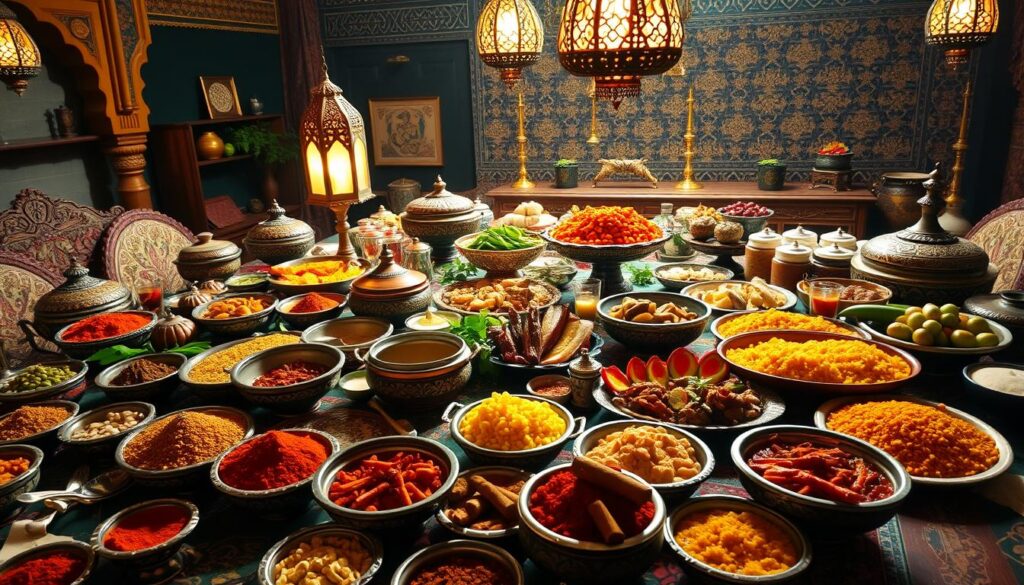
Morocco’s food varies by region, showing its diverse geography and culture. Coastal areas, mountains, and deserts each have their own flavors and cooking methods. The north is influenced by Spain, while the south has African tastes.
Looking for Moroccan cuisine near me? You’ll find rich flavors and traditions. Whether at home or in a Moroccan restaurant, it’s a culinary adventure.
Essential Ingredients in Moroccan Cooking
Moroccan cuisine is known for its unique flavors. It uses aromatic spices, fresh herbs, and staple ingredients. These have been perfected over centuries.
Signature Spices and Herbs
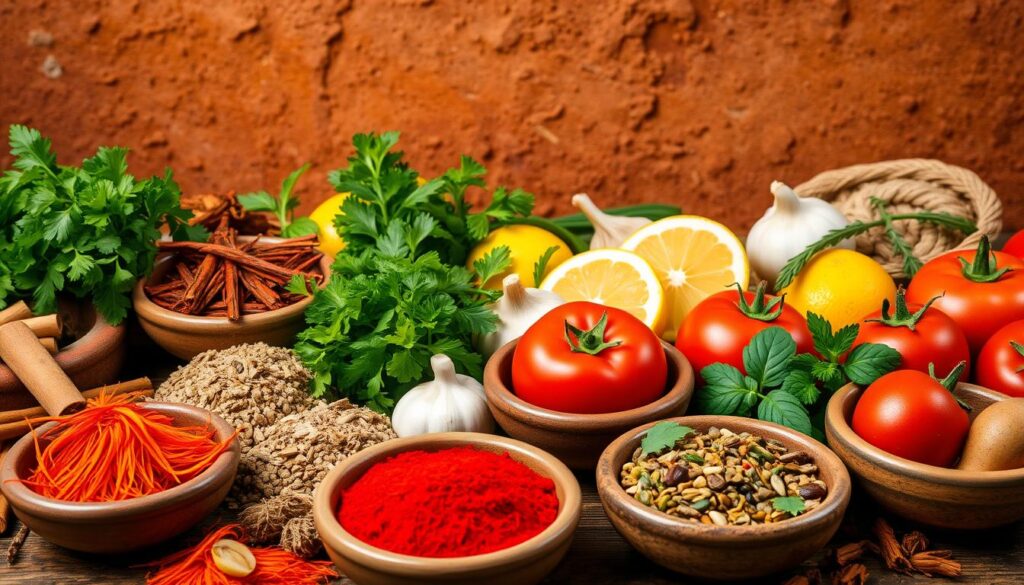
Moroccan dishes are flavored with a mix of spices and herbs. Signature spices like cumin, coriander, cinnamon, and ginger are used. They create the distinct taste of Moroccan tagines and stews. Fresh herbs like parsley and cilantro add freshness and depth.
Some key spices and herbs include:
- Cumin and coriander for their earthy warmth
- Cinnamon for its sweet and spicy flavor
- Ginger for its zesty and invigorating taste
- Parsley and cilantro for freshness
Staple Foods and Base Ingredients
Olives, dates, and preserved lemons are staples in Moroccan cooking. Olives are used in tagines and salads. Dates are enjoyed as a snack or in savory dishes. Preserved lemons add a salty, tangy flavor.
To cook Moroccan dishes at home, stock up on these ingredients. You can find them at international grocery stores or online. Searching for Moroccan food in my area might also lead you to local restaurants serving authentic dishes.
Preserved and Fermented Elements
Preserved and fermented ingredients add depth to Moroccan dishes. Preserved lemons, for example, are a staple. They’re used to add citrus flavor to tagines and salads.
Other preserved ingredients include olives and pickled vegetables. They add flavor and texture to various dishes. Exploring Moroccan cooking further? Visit some of the best Moroccan restaurants nearby to see these ingredients in action.
Iconic Moroccan Dishes You Must Try
Morocco’s food scene is filled with dishes that highlight the country’s rich culinary history. Moroccan food is a mix of flavors, shaped by the country’s culture and geography. Exploring Moroccan cuisine, you’ll find dishes full of tradition and taste.
Tagine Varieties and Preparation
Tagine is a key Moroccan dish, a slow-cooked stew cooked in an earthenware pot. It can have meat, poultry, or veggies, with dried fruits and nuts added. The slow cooking blends the flavors, making a delicious stew.
Some favorite tagines include:
- Chicken tagine with preserved lemons and olives
- Lamb tagine with prunes and almonds
- Vegetarian tagine with seasonal veggies
To make tagine, you need a traditional pot or a slow cooker. The ingredients are layered, with the lid on to keep flavors and moisture in.
Couscous: The National Dish
Couscous is Morocco’s national dish. It’s small, steamed balls of durum wheat semolina. It’s served with veggies and meats, and a tasty broth.
Couscous is very flexible, making it a key part of Moroccan food.
Pastilla and Other Savory Pastries
Pastilla is a Moroccan savory pastry. It has layers of flaky dough, filled with meat, onions, and spices. It’s great as an appetizer or main dish. Other pastries include:
- B’stilla triangles with spiced meat
- Meat-filled briouats, crispy fried pastries
These pastries are tasty and show off Moroccan cooks’ skill.
Sweet Treats and Moroccan Desserts
Discover the sweet side of Moroccan desserts. Honey, nuts, and spices blend beautifully. These sweets are a big part of Moroccan culture, enjoyed at special times.
Traditional Pastries and Cookies
Moroccan pastries and cookies are famous for their beauty and taste. Baklava, with its layers of dough, nuts, and honey, is a favorite. You’ll also find ghriba, a buttery cookie, and ka’ak, often with nuts or coconut.
These treats are a big part of welcoming guests. If you’re looking for moroccan dishes close by, try these pastries and cookies.
Fruit-Based Desserts and Honey Delicacies
Moroccan desserts often use fresh fruits like oranges, lemons, and dates. Honey is also a key ingredient, adding sweetness. Try uroc moroccan food like honey-soaked baklava or fruit salads.
| Dessert | Main Ingredients | Description |
|---|---|---|
| Baklava | Phyllo dough, nuts, honey | Layered pastry with nuts, sweetened with honey |
| Ghriba | Flour, sugar, butter | Shortbread-like cookie, often flavored with nuts or coconut |
| Fruit Salad | Seasonal fruits, honey | Refreshing mix of seasonal fruits, often drizzled with honey |
Exploring Moroccan desserts is a treat. You’ll find a wide range of flavors and textures. Whether it’s traditional pastries or fruit desserts, Morocco’s culinary heritage will impress you.
Moroccan Food Near Me: Finding Authentic Restaurants
Looking for authentic Moroccan food is now easier with our guide. Whether you love food or want to try something new, finding a real Moroccan restaurant is exciting. Start by searching for places that serve tagine and couscous, which are key to Moroccan cuisine.
Characteristics of Authentic Moroccan Restaurants
An authentic Moroccan restaurant is known for its rich flavors and aromatic spices. When you search for “moroccan food near me,” look for places with many tagine and couscous options. Traditional dishes like pastilla and harira are also a must. The atmosphere should feel like Morocco, with decorations that take you there.
Top-Rated Moroccan Restaurants in Major US Cities
Big US cities like New York, Los Angeles, and Chicago have great Moroccan food. Here are some top places to try:
| City | Restaurant Name | Notable Dish |
|---|---|---|
| New York | Moroccan Kitchen | Chicken Tagine |
| Los Angeles | Marrakech Restaurant | Couscous Royale |
| Chicago | The Moroccan | Beef Tagine with Prunes |
Using Apps and Websites to Locate Moroccan Eateries
In today’s world, finding great “moroccan cuisine near me” is easy with your phone. Apps like Yelp and Google Maps can show you the best Moroccan restaurants. You can sort by ratings, distance, and price to find the best spot.
When you find a place, check online reviews to make sure it’s good. Look for mentions of traditional dishes and the dining experience.
Moroccan Dining Etiquette and Customs
Moroccan dining is more than just eating; it’s a cultural experience. It involves specific customs and etiquette. When you join a traditional Moroccan meal, you’ll see the focus on eating together, showing respect, and following local traditions.
Hand-Washing and Communal Eating Practices
In Morocco, dining is a group affair where food is shared from a central dish. Hand-washing is key, showing respect for the meal and company. Guests wash their hands before and after eating.
Communal eating is central to Moroccan dining. Meals are served on a large platter. It’s customary to eat with your right hand, using bread or couscous to pick up food. This builds a sense of community and togetherness.
Seating Arrangements and Table Manners
Seating in Moroccan dining often includes cushions or low chairs around a low table. The most honored guest sits at the head or center. It’s polite to wait for the host to show you where to sit.
Table manners in Morocco show respect and politeness. It’s rude to start eating before the host invites you. Trying a little of each dish shows appreciation for the meal.
Hospitality Expectations and Proper Responses
Moroccan hospitality is known for its warmth and generosity. When dining with Moroccans, you’ll be treated with respect and offered the best food. As a guest, showing appreciation for the meal and company is important.
| Custom | Description | Guest’s Response |
|---|---|---|
| Hand-washing | Washing hands before and after eating | Follow the host’s lead and wash your hands |
| Communal Eating | Sharing food from a central dish | Use your right hand to eat and try a bit of each dish |
| Seating | Sitting on cushions or low chairs | Wait for the host to indicate your seat |
By understanding and respecting these customs, you’ll dive into Morocco’s rich culinary culture. You’ll enjoy authentic Moroccan dishes in a memorable dining experience.
Health Benefits of Moroccan Cuisine
Moroccan cuisine is a healthy choice because it focuses on fresh ingredients and herbs. The spices, herbs, and fresh produce add flavor and health benefits.
Nutritional Value of Key Ingredients
Moroccan cooking uses olive oil, vegetables, fruits, and lean proteins. These ingredients are full of nutrients and antioxidants. Olive oil is good for your heart because it has healthy fats. Vegetables and fruits give you important vitamins and minerals. Lean proteins help keep your muscles strong.
| Ingredient | Nutritional Benefit |
|---|---|
| Olive Oil | Rich in healthy fats |
| Vegetables | High in vitamins and minerals |
| Lean Proteins | Supports muscle health |
Mediterranean Diet Connections
The Mediterranean diet is similar to Moroccan cuisine. Both use olive oil, fresh vegetables, and fruits. Adding healthy Moroccan recipes to your diet can make your meals more enjoyable and healthy.
Enjoying Moroccan cuisine can improve your health. You can cook at home or find Moroccan food near me. This way, you can enjoy the health benefits of Moroccan food.
Creating Moroccan Flavors at Home
It’s easy to bring Moroccan flavors into your kitchen. Just a few tools and ingredients are needed. You can cook authentic Moroccan meals and feel like you’re in Marrakech.
Essential Kitchen Tools for Moroccan Cooking
You’ll need some key tools to start. A tagine pot is essential for Moroccan stews. It cooks meat and veggies slowly, adding rich flavors. Also, a mortar and pestle is needed to grind spices and herbs.
Simple Moroccan Recipes for Beginners
Begin with simple dishes like chicken tagine or couscous with vegetables. These are perfect for beginners and need just a few ingredients. You can find many Moroccan recipes online or in cookbooks.
Sourcing Authentic Moroccan Ingredients in the US
Getting the right ingredients is key for authentic flavors. Find authentic Moroccan ingredients at Middle Eastern or North African stores, or online. You can also use local substitutes to make recipes easier.
Follow these tips and try different Moroccan recipes. You’ll make delicious, authentic Moroccan dishes at home.
Conclusion: Embracing the Moroccan Culinary Experience
You’ve now explored the rich heritage and diverse flavors of Moroccan cuisine. From its historical influences to the essential ingredients and iconic dishes, it’s truly unique. Remember, the culinary experience is not just about the food. It’s also about understanding the cultural context and etiquette surrounding meals.
Whether you’re searching for “Moroccan food near me” or experimenting with new recipes at home, you’re becoming part of a culinary tradition. This tradition values hospitality and communal dining. By embracing the cultural aspects of Moroccan dining, you can deepen your appreciation for this vibrant cuisine and enjoy a more authentic experience.
As you savor the flavors of Morocco, consider exploring local Moroccan restaurants or trying your hand at preparing traditional dishes like tagine or couscous. Moroccan cuisine has something to offer every palate, inviting you to continue exploring and enjoying its many delights.